2027 Medicaid Changes: What Therapists Need to Know

Key Takeaways
- The One Big Beautiful Bill Act (H.R. 1) brings three Medicaid changes starting in 2027 that could lead to more coverage gaps and denied claims.
- Most adults covered through Medicaid expansion will need to renew their coverage every six months instead of once a year.
- Many expansion adults ages 19–64 will need to complete 80 hours a month of work, school, or volunteering to keep coverage. Being in therapy doesn't automatically mean a client is exempt.
- Medicaid will cover fewer past bills: one month for expansion adults and two months for most other groups, down from three.
- Checking eligibility before every appointment is the best way to protect your practice from denied claims.
Big changes are coming to Medicaid in 2027. If you accept Medicaid clients and handle your own billing, here's what you need to know to help protect your practice from denied claims.
The One Big Beautiful Bill Act (OBBBA), also called H.R. 1, signed into law on July 4, 2025, changes how some clients qualify for and keep Medicaid coverage. These changes mainly affect states that expanded Medicaid.
These changes could mean more gaps in coverage, more denied claims, and more billing work for your practice.
The good news? A few simple steps can help you stay ahead of these changes.
What top three Medicaid changes do therapists need to know about in 2027?
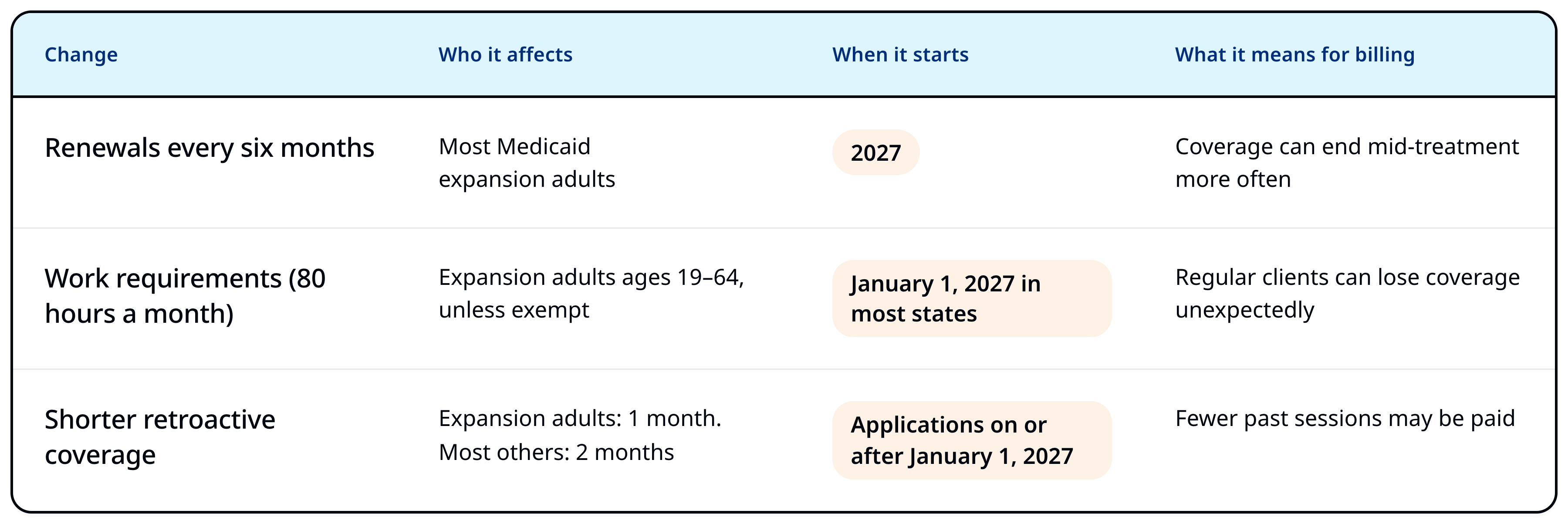
1. Some clients will need to renew Medicaid every six months
Starting in 2027, most adults covered through Medicaid expansion will need to renew their coverage every six months instead of once a year. This means your clients may have more chances to miss a renewal deadline and lose coverage.
Not all Medicaid clients will be affected. Children and people in other Medicaid groups generally have different renewal rules.
What this means for your practice: A client who had active coverage last month may no longer be covered today.
2. Some clients will need to meet work requirements
Many adults ages 19–64 covered through Medicaid expansion will need to complete at least 80 hours a month of approved activities, such as:
- Working
- Attending school
- Volunteering
Some clients will be exempt, including certain people with mental health or substance use conditions. However, being in therapy does not automatically qualify someone for an exemption.
Clients who don't meet the rules or provide the required proof could lose coverage. Work requirements start January 1, 2027 in most states, though some states may get extra time to begin.
What this means for your practice: Even clients who attend therapy regularly could have unexpected gaps in Medicaid coverage.
3. Medicaid will cover fewer past medical bills
Medicaid can currently cover eligible services received up to three months before someone applies. For applications made on or after January 1, 2027, that period will be reduced to:
- One month for Medicaid expansion adults
- Two months for most other Medicaid groups
What this means for your practice: If a client applies for Medicaid after receiving treatment, fewer past sessions may qualify for payment.
How can you avoid Medicaid claim denials?
Imagine seeing a Medicaid client every Tuesday. Their insurance was active when they started therapy, and you've had no trouble getting claims paid.
Then, without your knowledge, their coverage ends.
You continue seeing them for several weeks. When you submit your claims, they're denied because the client wasn't covered on those dates. Now you're spending time calling Medicaid, checking coverage dates, and dealing with unpaid sessions.
The best way to catch coverage problems early is to check Medicaid eligibility before every appointment. This billing practice can help you:
- Reduce denied claims: Catch inactive coverage before providing services.
- Save time: Spend less time fixing claims and calling insurance companies.
- Avoid surprises: Let clients know about possible coverage problems sooner.
- Protect your income: Reduce the risk of providing services that Medicaid won't pay for.
Remember, Medicaid coverage can change at any time, not just during renewal periods.
How can TherapyAppointment help with Medicaid eligibility checks?
If you're managing your own billing, you already have plenty to keep track of.
TherapyAppointment's EMR practice management software lets you check a client's insurance eligibility right from their profile for $0.07 per check. See our Insurance Eligibility Verification Help Center article to learn how.
TherapyAppointment can also help remind you when it's time to review a client's insurance.
Here's how to set up a reminder:
- Open the client's insurance policy in TherapyAppointment.
- Enter an end date three or six months from today.
- Two weeks before that date, TherapyAppointment will flag the policy under Insurance Policy Problems on your Home screen and Billing dashboard.
- When you see the alert, check the client's Medicaid eligibility and enter a new reminder date.
Important: The date you enter is only a reminder for your practice. It does not change the client's actual Medicaid coverage or expiration date.
These reminders are helpful for regular reviews, but they do not replace checking eligibility before each appointment. nFor more information, visit our Insurance Policy Problems Help Center article.
Get your practice ready for 2027
Medicaid changes don't have to mean more billing headaches.Start preparing now by making eligibility checks part of your daily billing routine.
Encourage clients to watch for Medicaid renewal notices and respond on time. Since each state manages its own Medicaid program, check your state Medicaid agency for updates.
Sources: CMS Community Engagement Interim Final Rule fact sheet, Federal Register: Medicaid Community Engagement Requirement, CMS State Medicaid Director Letter #26-001 on six-month renewals (Medicaid.gov)
This article provides general information, not legal or billing advice. Medicaid rules and implementation dates may vary by state.